|
The Anchor Inn, also referred to as The Blue Anchor
in a 1758 ledger of Wivenhoe Contributions to the
Poor and known as the Anchor Hotel, is one of the
earliest pubs in Wivenhoe. Its Colne riverside
location and extensive accommodation made it popular
in the 1800s with boat owners and captains and
public auctions were often held here.
Thomas Munnings, landlord in 1777, also became
'Master of Wivenhoe Bath' and the pub would have
been run by his wife Rebecca. The bathhouse was
further up the quay, near the end of the now named
Bath Street and was first opened by Horace Flack in
about 1750.
Oysters
Various landlords of riverside pubs were also
described as oyster merchants, Charles Heath in 1846
is a notable example and was, by provision of
Colchester Natives to a platoon of soldiers,
instrumental in an amicable agreement being reached
between the platoon and fishermen who had been
blocking them on the quay. The day-to-day running of
the pub would have been carried out by Charles' wife
Amelia. The pub remained in the family, passing
first to his son William Heath and then his
son-in-law Henry Wood who had married Charles'
eldest daughter, Emma Elizabeth.
The Wivenhoe
Earthquake
In 1884 the Essex Earthquake badly affected
many of the older properties along the riverside,
the main building of The Anchor was however little
damaged. Dick Ham the landlord, described as 'the burly auctioneer
and undertaker' and as 'a leading Wivenhoe
builder from the 1800s to 1920s', told the
Essex Standard that he was in the pub yard
surrounded by falling debris, however the roof of
The Anchor was in the main unscathed.
Auctions
From the 1800s up to its close in 1911 The
Anchor was a popular choice, along with The Falcon,
for auctions to be held in Wivenhoe. Building land,
houses, furniture and a number of boats were sold by
auction, in 1850 the smack "Oyster", in 1871 a
'partly built ship's boat, 17ft. long' and in 1863
an intriguing lot of 1,400ft. of oak timber,
3,000ft. of oak and fir planks and 11 cwt. of iron
knees &c, arising from the pulling to pieces of
an entire new ship.
Last records
After the 1911 census there is no record of
the pub, research of Daniell & Sons books, they
were the last owners, might reveal the date of sale
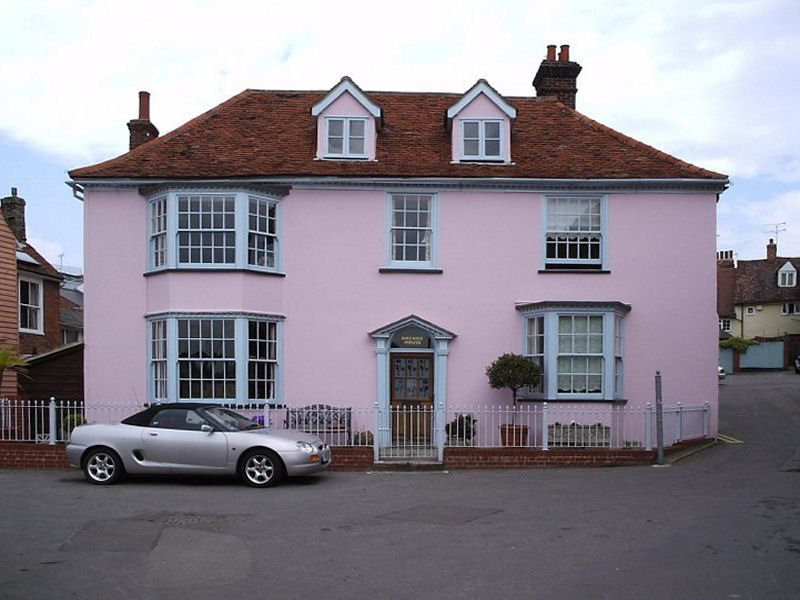
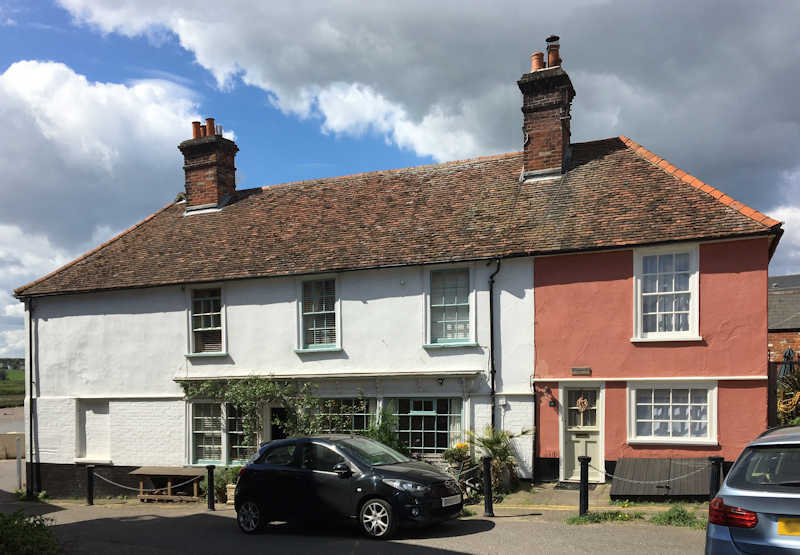
to private owners as a residence. It remains a
private house today retaining the former pub yard
but the return section up Anchor Hill now being two
separate cottages.
|
|
Publicans:
This list of names is from census returns,
1867 PO Directory & 1933 Kelly's Directory. They
are the occupants, not necessarily the licensee or
owner.
1684: Henry Garland
1729: William Hempsted
1773: John Hempsted
1777: Thomas Munnings
1779: Abraham Brown
1786: John Woods
1819: Sarah Woods
1820: Elizabeth Cook
1821: Joseph Roberts
1841: William Roberts
1843: William Bell
1851: Charles Heath
1867: William Heath
1868: Henry Wood
1871: Samuel Spinks
1872: Charles Bennett
1876: Joseph Blyth
1881: William Jones
1883: Dick Ham
1891: Harriet Edbrook
1893: Charles Forster
1901: William B Martin
1904: George Hardy
1907: Joseph Burgess
1909: Henry Bird
1911: Isaac James Hook
|